
SW Portland: Multnomah Village
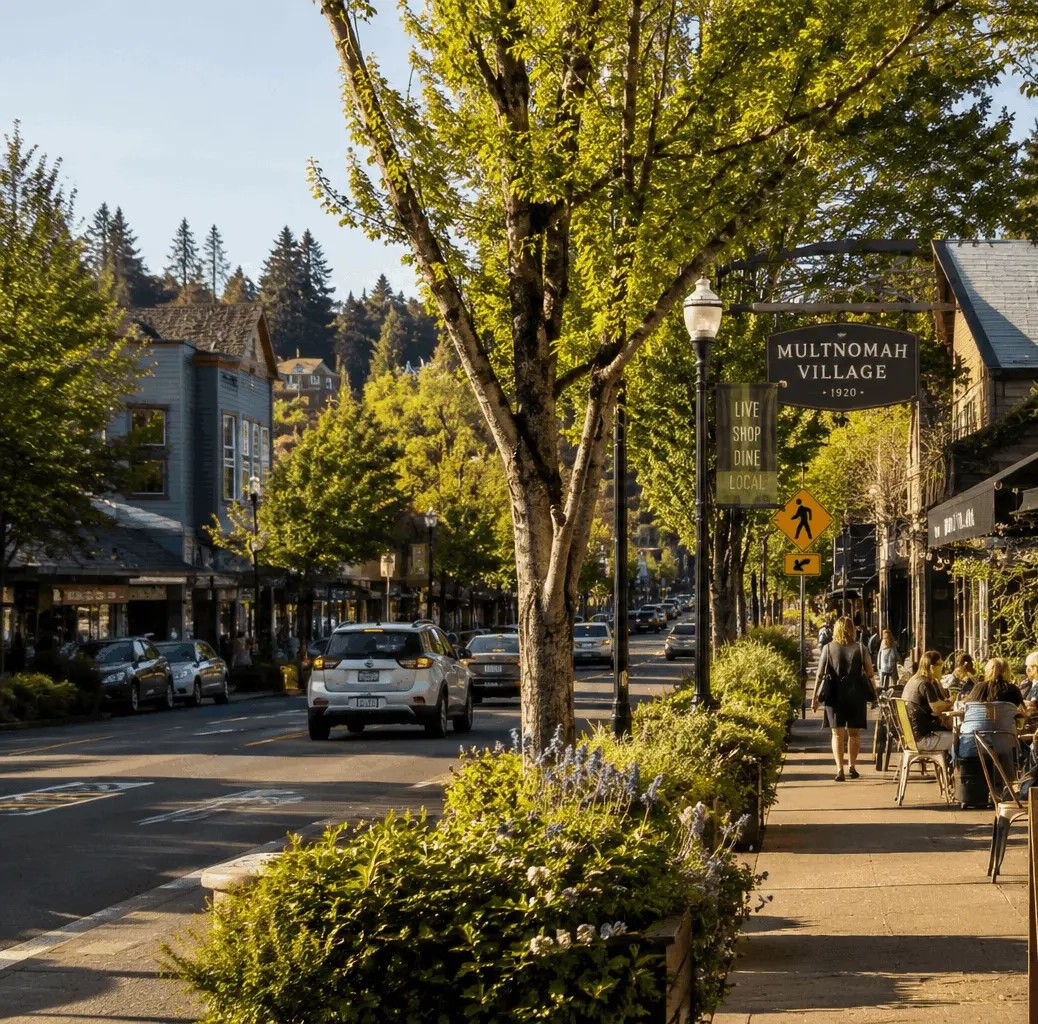
Multnomah Village: The SW Portland Neighborhood That Refused to Become a Suburb
Somewhere along SW Capitol Highway, about four miles from downtown Portland, something unexpected happens: the city gives way to a village. Not a lifestyle concept or a developer's marketing term. It's an actual village, with a hardware store and a bookstore and a coffee shop that's been there longer than most of its customers have been alive.
Multnomah Village is one of Portland's most distinct and most quietly beloved neighborhoods. It has been stubbornly itself through every wave of development that reshaped the city around it, and that stubbornness is exactly what makes it worth understanding.
The Village Commercial Strip
The heart of Multnomah Village is the stretch of SW Capitol Highway between roughly 34th and 36th Avenues. It's a compact, walkable commercial district that manages to pack genuine neighborhood identity into about three blocks.
What you'll find here reads like a list of things people claim don't exist anymore:
- Annie Bloom's Books, a Portland institution that has been in the village for decades and has no intention of leaving
- Coffee shops that function as genuine neighborhood gathering places, not aesthetic props
- Independently owned restaurants ranging from longtime neighborhood fixtures to newer arrivals that chose the village specifically for its community character
- A wine bar or two with real local following
- Local services, including a hardware store, dry cleaning, pharmacy, and more. All of that mean you can actually run errands on foot.
The key thing about Multnomah Village's commercial strip is that it exists for the people who live within walking distance of it. Unlike Hawthorne or Division, it doesn't attract visitors from across the city on a regular basis. That self-containment is a feature, not a limitation. It's why the neighborhood feels the way it does.
The Neighborhood's History and Character
Multnomah Village was actually an independent town before it was annexed by Portland in 1914. That history matters because it explains the built environment: the commercial district has the scale and layout of a small-town main street, not a Portland neighborhood corridor. The blocks feel wider, the buildings lower, the whole thing more legible than a typical urban neighborhood.
The residential streets around the village are a mix of craftsman bungalows, mid-century ranches, and some more recent construction on infill lots. The neighborhood sits in a natural bowl, surrounded by the gentle hills of SW Portland, which gives it a physically distinct sense of place. You arrive in Multnomah Village rather than passing through it.
Gabriel Park
Gabriel Park is one of SW Portland's most significant public spaces and one of Multnomah Village's most important assets. At 90 acres, it offers sports fields, forested trails, off-leash dog areas, tennis courts, and the kind of natural buffer that makes the surrounding neighborhood feel less urban than it actually is.
For families with kids or anyone who prioritizes outdoor access, Gabriel Park meaningfully changes the quality-of-life calculus for Multnomah Village. It's the kind of park that turns into a daily habit rather than an occasional destination, and daily habits are what make a neighborhood feel like home.
The Housing Market
Multnomah Village offers some of the most compelling value in SW Portland for buyers who understand what the neighborhood is. The housing stock: bungalows, mid-century ranches, the occasional updated foursquare, runs at prices that reflect the neighborhood's location south of the more heavily trafficked SW corridors rather than its quality of life, which is genuinely high.
- Craftsman bungalows and smaller homes: $475,000–$690,000
- Mid-century ranches and larger single-family homes: $560,000–$820,000
- Updated or expanded homes on premium lots: $700,000–$950,000
For buyers who have been looking in SE Portland and finding Woodstock or Sellwood prices difficult, Multnomah Village frequently delivers comparable neighborhood quality at a 5–10% discount, with the added benefit of SW Portland's overall character and less eastside congestion.
Getting Around
Multnomah Village is more car-dependent than the downtown SW neighborhoods. Although there's no light rail, there are many bus connections to downtown which take 20–30 minutes. For daily commuters into downtown, this is worth factoring in.
The flip side: within the neighborhood itself, a car is rarely necessary. The village commercial strip handles most daily needs on foot, Gabriel Park is walkable, and the surrounding residential streets are pleasant enough that most residents find themselves walking more than they expected. The car lives in the garage more than it did before they moved here.
Considering Making Multnomah Village Your Home?
Multnomah Village attracts buyers who have done their research and found something they weren't sure still existed: a real neighborhood, with a real center, that has maintained its identity without being overrun or priced beyond recognition.
Often these are buyers with SE Portland sensibilities, the Woodstock or Sellwood buyer who either found the prices too high or who discovered Multnomah Village on a Saturday morning walk and immediately understood what they were looking at. Families with kids who want Gabriel Park in their backyard. People who want to know their neighbors and be known by the person behind the coffee counter. Buyers who want Portland without feeling like they're living on a set.
Once people find Multnomah Village, they tend not to leave. The waitlist for that feeling is shorter than it used to be. Now is a good time to get on it.
→ Cedar & Stone Realty Group can show you what's available in Multnomah Village and surrounding SW neighborhoods. Let's connect.
Categories
Recent Posts