October Q&A Series Q21: Buying in Portland's West Hills: What Should I Check on a Sloped Lot?

Question 21: Buying in Portland’s West Hills: What Should I Check on a Sloped Lot?
The West Hills sell themselves: tree canopy, city views, quiet winding streets and a commute that can be shorter than it looks on a map. They also come with a set of questions flat lot buyers never have to ask. None of them should scare you off. All of them should be on your list.
Water is the main character
On a hillside, water decides almost everything. Look for:
- Where runoff goes from the roof, driveway and uphill neighbors.
- Gutters and downspouts that are connected and carry water away from the foundation and the slope.
- Soggy areas, seeps or erosion in the yard, especially after rain.
- Cracks or moisture in basement or daylight walls on the uphill side.
A sunny August showing hides a lot. If you can, visit after a rainy stretch, which in Portland is usually not a long wait.
Retaining walls
Retaining walls hold back a lot of weight. Check for leaning, bulging, cracks, rotting timbers and drainage weep holes that actually drain. Ask who owns each wall, since some sit on property lines or hold up a neighbor’s yard. A failing wall is one of the most expensive surprises on a hillside lot.
Access in every season
- How steep is the driveway, and does it face north, where ice lingers?
- Is the street narrow, winding or hard to plow?
- Where do guests park?
- How far is it to a main road, and how does that route behave in snow?
Mapped hazards
State landslide and geologic hazard maps, along with city and county mapping tools, can show whether the property sits in a mapped hazard area or special zone. A mapped hazard doesn’t mean a problem exists, and the absence of one isn’t a guarantee. It’s a reason to look closer.
Permit records
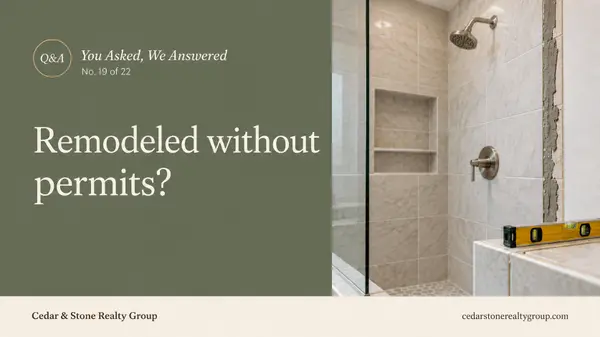
Check permit history for retaining walls, decks, additions and drainage work. Hillside projects often require engineering, and permits tell you whether that review happened. (Question 19 covers what to do if work wasn’t permitted.)
When to call a specialist
Bring in a geotechnical engineer if the inspector (or you) see signs of slope movement, a large or failing retaining wall, significant cracking, or a mapped hazard. A structural engineer can evaluate decks, foundations and walls. These evaluations cost more than a standard inspection and are worth every dollar on the right property.
What a good hillside home looks like
Well managed drainage, solid retaining walls with permits, a foundation without active movement, and a seller who can show maintenance records. Plenty of West Hills homes check every box. The goal is finding them.
Dreaming of a view? Let’s tour with a hillside checklist in hand, and I’ll help line up the right specialists if we need them.
This post is general information. Consult licensed engineers and review official hazard maps for site specific evaluations.
Categories
Recent Posts