October Q&A Series: Q14: Radon in a Portland Home: Should Buyers Negotiate, Mitigate or Walk Away?
Question 14: Radon in a Portland Home: Should Buyers Negotiate, Mitigate, or Walk Away?
Radon is the inspection finding with the most ominous name and, often, the most straightforward fix. It’s a naturally occurring radioactive gas that comes up from the soil, can build up indoors, and is a leading cause of lung cancer after smoking. You can’t see it or smell it. You can test for it, and you can reduce it.
Some parts of the Portland area, especially in North and NE Portland, tend to show elevated levels. But radon varies house by house, even next door. The only way to know is to test.
Understanding the number
Radon is measured in picocuries per liter (pCi/L).
- 0 pCi/L or higher: the EPA recommends fixing the home.
- Between 2.0 and 4.0: the EPA suggests considering a fix, since lower is better.
- Below 2.0: generally no action needed, though retesting every few years is smart.
How testing works during a purchase
A short term test usually runs at least 48 hours with “closed house conditions,” meaning windows and doors stay shut except for normal coming and going. A certified tester will set the device in the lowest livable level and interpret the result. If the result is borderline, or if the test conditions seem off, a second test can be worth the wait.
What mitigation looks like
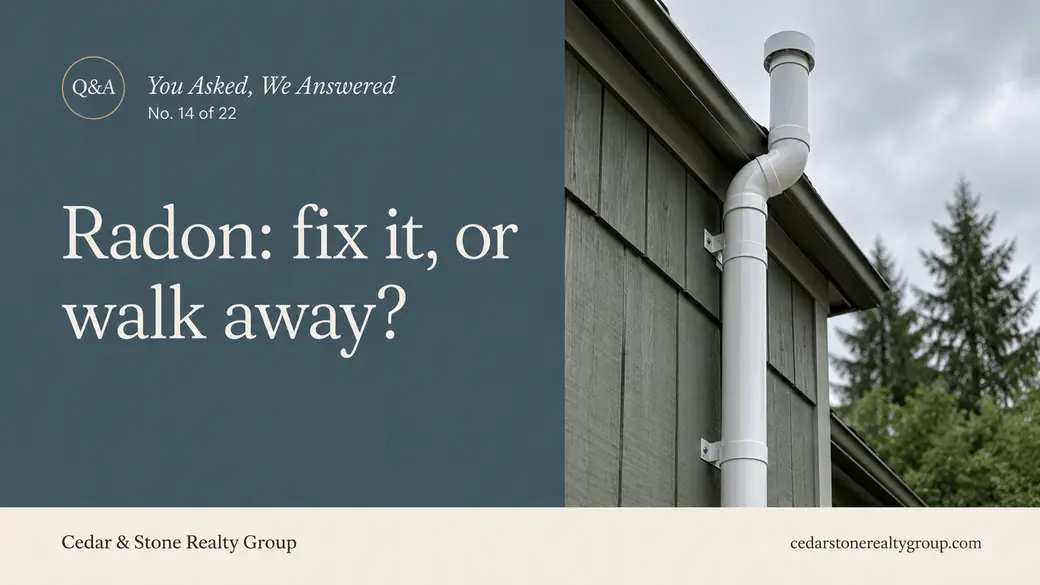
The most common system is called sub slab or crawlspace depressurization. A contractor installs a pipe and a quiet fan that pulls radon from beneath the home and vents it above the roofline. Systems are typically installed in a day and cost a few thousand dollars, depending on the foundation and layout. After installation, a follow up test confirms it’s working.
If the home already has a system
That’s usually good news. Ask for:
- A recent test result showing levels with the system running.
- Proof the fan works, and a look at the gauge on the pipe that shows the system is pulling air.
- The installer’s paperwork and any warranty.
An existing system that’s been tested is often worth more peace of mind than a house that’s never been checked.
Your options as a buyer
- Ask the seller to mitigate before closing, with a certified mitigator and a passing post mitigation test.
- Ask for a credit and install the system yourself after closing, with your own contractor and timeline.
- Accept the home and plan to mitigate, especially if the price already reflects it.
- Walk away. Rarely necessary for radon alone, since it’s so fixable. But if it’s one issue on a long list, it can tip the balance.
This post is general information. For health guidance and testing standards, consult the EPA, the Oregon Health Authority, and certified radon professionals.
Categories
Recent Posts