
5 Real Estate Myths Portland Homeowners Still Believe
REAL ESTATE MYTHS | CEDAR & STONE REALTY GROUP | MAY 2026
5 Real Estate Myths Portland Homeowners Still Believe
Facts beat feelings when it comes to your biggest asset. Here's what's actually true.
I love a good real estate headline. "Market Crash Imminent." "Now Is the Perfect Time to Buy." "Sellers Are Losing Everything." "Buyers Have All the Power." They're everywhere, they're confident, and they are — with remarkable consistency — either wildly oversimplified or just flat wrong.
Real estate is one of those topics where everyone has an opinion, usually based on something they heard, something they read once, or something that happened to their cousin in 2009. And because a home is most people's single largest financial asset, those opinions have real consequences when they shape real decisions.
So let's do something useful. Let's take five of the most persistent myths I hear from Portland-area buyers and sellers — the ones that cost people money, cost them time, or cost them the right home — and swap them out for the actual facts.
No hype. No headlines. Just what's real.
Myth #1: "Price it high — you can always come down"
THE REALITY
This is one of the most expensive mistakes a seller can make, and it feels so logical on the surface. You love your home. You've put money into it. You want top dollar. So you price it a little high, figuring buyers will negotiate and you'll meet in the middle. Right?
Wrong. Here's what actually happens.
Buyers in today's Portland metro are informed. Their agents are pulling comps. They know what homes are selling for in your neighborhood, and when they see a listing priced above what the market supports, they don't make a low offer — they skip the showing entirely. In a market where days on market already average 91 days, an overpriced home doesn't generate a negotiation. It generates silence.
Then the price reduction comes. And here's the painful part: a home that has sat for 30, 45, or 60 days with a price reduction attached to it is now telling every buyer who looks at it the same thing — something is wrong with this one. Even when nothing is wrong. Even when it's just a number that was too high.
The data is consistent on this point: well-priced homes that generate early activity almost always sell for more than overpriced homes that eventually reduce to the same number. The strategy of pricing high and coming down sounds like leverage. It's actually the opposite.
Strategic pricing creates urgency. Overpricing creates doubt. And doubt is very expensive.
Myth #2: "You need 20% down to buy a home"
THE REALITY
This one has been floating around since roughly forever, and it keeps living because it has a kernel of truth wrapped around a lot of outdated assumption.
Yes, putting 20% down means you avoid private mortgage insurance (PMI). That's real. But the conclusion that most buyers draw from that fact — that you can't or shouldn't buy a home without 20% down — is simply not accurate in 2026.
There are strong, conventional loan programs that allow buyers to purchase with as little as 3% to 5% down. FHA loans at 3.5% down. VA loans for eligible veterans with zero down. Oregon-specific first-time buyer programs with down payment assistance that many buyers don't even know exist.
Here's the math that gets lost in the 20% myth: PMI on a conventional loan typically costs somewhere between 0.5% and 1% of the loan amount annually. On a $500,000 loan, that's roughly $200-$400 per month. That's real money — but it's also often less than the difference between what someone is paying in rent and what they'd pay to own. And unlike rent, every mortgage payment is building equity.
The buyers who wait until they've saved 20% in a market where home values are appreciating are often chasing a number that keeps moving. By the time they hit the threshold, the price of the homes they want has gone up — and so has the 20% target. It's a treadmill.
Talk to a lender. Get the actual numbers for your actual situation. You may be a lot closer to ownership than the 20% myth has led you to believe.
The 20% rule was written for a different era. Don't let it keep you out of a home you can actually afford today.
Myth #3: "Zillow's Zestimate tells me what my home is worth"
THE REALITY
I say this with great affection for anyone who has ever opened Zillow at midnight to check their home's value: the Zestimate is not what your home is worth. It is an algorithm's best guess, fed by public data, with no knowledge of your home's actual condition, your recent upgrades, the view from your kitchen window, or the fact that three houses just sold on your street in quiet off-market transactions that never made it into the data set.
Zillow themselves have acknowledged this. Their own research has shown that Zestimates have a median error rate that can swing tens of thousands of dollars in either direction — and in neighborhoods with lower sales volume, like many Portland-area suburbs, the accuracy gets worse, not better.
The consequences of trusting a Zestimate cut both ways. Sellers who price based on a Zestimate that's too high end up sitting on the market with the consequences we described in Myth #1. Sellers who see a Zestimate lower than their home's actual value sometimes leave money on the table by underpricing or by talking themselves out of selling when they'd actually do well.
Buyers use Zestimates to form expectations about what they should pay, and then feel like they're overpaying when a well-priced home comes in above that number, even when the market fully supports the listing price.
Zillow is a great place to browse. It is not an appraisal. It is not a comparative market analysis. It is not a substitute for a conversation with someone who actually knows your neighborhood and has looked at your home with their own eyes.
A Zestimate is a starting point for curiosity. It is not a number you should make a major financial decision around.
Myth #4: "You should renovate before you sell to get top dollar"
THE REALITY
This one makes intuitive sense and is wrong often enough that I feel compelled to talk about it every time a seller brings it up.
The logic goes: if I spend $40,000 on a kitchen remodel, my home will sell for $60,000 more and I'll net $20,000. Sometimes that math works. More often it doesn't — and here's why.
First, renovation costs in the Portland metro have risen significantly. Labor is expensive. Materials are expensive. Projects take longer than expected and cost more than quoted. A renovation that seemed like a clear financial win on paper can quickly become a break-even proposition or worse.
Second, buyers have taste. The kitchen you renovated in the finishes you love might not be the kitchen the buyer who makes your best offer would have chosen. They might have preferred a credit and the ability to do it themselves. You've now made a major decision on their behalf, with your money, based on your preferences — and the market may or may not reward you for it.
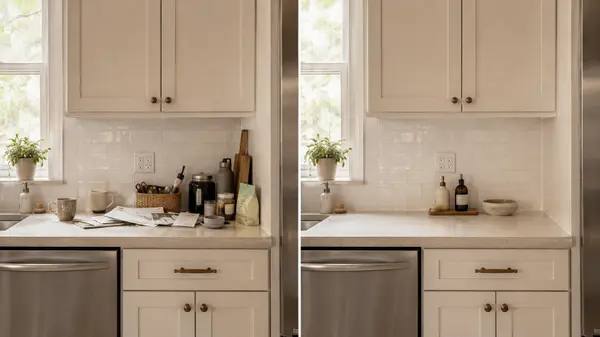
Third, and most importantly: the renovations that actually move the needle for sellers are almost never the glamorous ones. They're the condition items. A clean, well-maintained home with updated systems — roof, furnace, water heater — and fresh neutral paint will consistently outperform a home that got a designer kitchen but still has a fifteen-year-old HVAC system and deferred maintenance everywhere else.
Before you spend a dollar on pre-listing improvements, let’s have a conversation about what will actually return value in your specific neighborhood at your specific price point. Sometimes the answer is paint and professional cleaning. Sometimes it's nothing at all. Rarely is it a full kitchen renovation.
Spend money where buyers will notice it, not where the HGTV playbook says you should.
Myth #5: "Owning is more expensive than renting right now — so I'll wait"
THE REALITY
This is the myth I feel most strongly about, because it's the one that costs people the most — and the damage is often invisible until years later when they look back and do the math.
Yes. In many cases, a mortgage payment on a Portland metro home in 2026 is higher than what someone is currently paying in rent. That part is often true. But the conclusion — that renting is therefore the smarter financial move — is one of the most short-sighted pieces of conventional wisdom in personal finance.
Here's what the monthly comparison misses entirely.
When you pay rent, every dollar goes to your landlord. You build no equity. You have no asset. You have no hedge against the next rent increase, and in Portland, rent increases are real. When you pay a mortgage, a portion of every payment reduces your loan balance. You are building ownership in an asset that, over time, has historically appreciated. You are paying yourself as much as you are paying the bank.
The other thing the monthly comparison misses is time. Real estate rewards patience in a way almost no other asset class does. The person who bought a home in the Portland metro in 2010 — when the market felt uncertain and the monthly payment seemed high relative to renting — has a very different financial picture today than the person who waited. The person who waited in 2015 because rates were going to come down missed years of appreciation that no eventual rate drop could fully recover.
You don't time the real estate market. The market times you. Focus on time IN the market, not timing WHEN to get into the market.
I'm not saying everyone should buy regardless of their situation. Life circumstances matter. Job stability matters. Down payment readiness matters. But the blanket belief that renting is the smarter financial move because the monthly payment is lower is a comparison that ignores everything that makes homeownership one of the most reliable wealth-building tools available to ordinary people.
Time in the market beats timing the market. Every time. Without exception. The buyers who waited for rates to drop, for prices to fall, for conditions to feel perfect have, historically, lost that bet. The buyers who bought when they were financially ready and held on — they won.
Facts beat feelings — especially with your biggest asset
Real estate decisions made on headlines, hunches, and half-remembered things your brother-in-law said at Thanksgiving have a way of being expensive ones. The Portland market is nuanced. What's true metro-wide isn't always true in your neighborhood. What was true in 2022 is not necessarily true in 2026. And what feels true — because you read it on Zillow or saw it on the news — is often the thing that costs you.
That's what a good agent is for. Not to tell you what you want to hear. To tell you what's actually happening, in your specific market, at your specific price point, with your specific goals in mind.
If any of these myths hit a little close to home, or if you have a real estate belief you've been operating under that you're not entirely sure is true, I'd love to have a conversation. No pressure, no agenda. Just facts.
Because when it comes to your biggest asset, the truth is always the better strategy.
— Stacey
Cedar & Stone Realty Group | Serving the Portland Metro & Southwest Washington
Categories
Recent Posts